


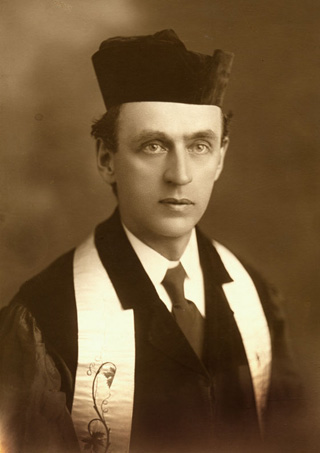
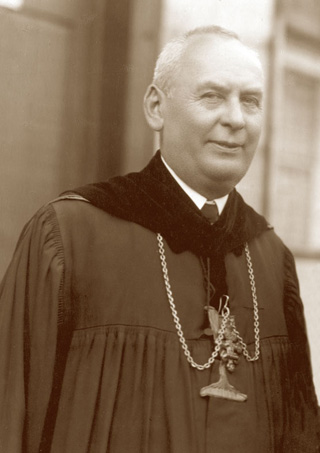
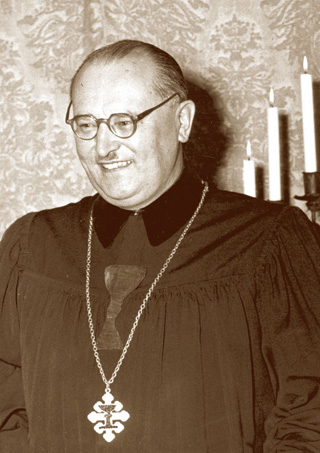
When the Church of Rome found intself in deep crisis in the fifteenth century, the priest and rector of Charles University in Prague, Jan Hus, made a radical attempt to implement a reform of the church and of society on the basis of the message of the Bible.
Hus was burned at the stake as a heretic at Constance on 6 July 1415, but his ideas were taken up by a broadly-based movement in the Czech lands, known as the Hussite movement.
This Czech Reformation was however silenced for many years after 1620 by the Counter-Reformation, which was allied with the imperial power of the Hapsburgs.
An attempt to revive the reform of the church was made towards the end of the nineteenth century by a movement of Roman Catholic priests. Among other things they rejected "Austhro-Catholicity" (linking the power of the church with temporal powerm represented by the Hapsburg monarchy), and endeavoured to renew a faith witch would become a creative force in modern-day life.